The question isn’t whether you’ll stumble. It’s how long you stay on the ground.
I lost a client I’d built a year of trust with over one missed deadline. Not a small miss — three days late, no warning, no call. Just silence, then an apology that landed like an excuse. I told myself it was a scheduling error. It wasn’t. I had been avoiding the work because I was scared it wasn’t good enough, and the fear turned into a delay, and the delay turned into a loss I could have prevented with one honest email a week earlier.
For two days I didn’t answer messages. Not from friends, not from family, not from the two other clients who had nothing to do with any of it. I told myself I was “processing”. Really, I was hiding. There’s a difference, and most of us blur it on purpose because hiding feels safer than the walk back into the room where people saw you fail.
Here’s what nobody tells you about falling: the fall itself is over in seconds. A missed deadline, a business that folds, a relationship that ends, a qualification you didn’t finish — these events happen fast. What takes people out isn’t the event. It’s the season after it, the one where you decide, quietly, without announcing it to anyone, whether you’re someone who gets back up or someone who explains why they didn’t.
The Recovery Arc: Grief, Reset, Reentry
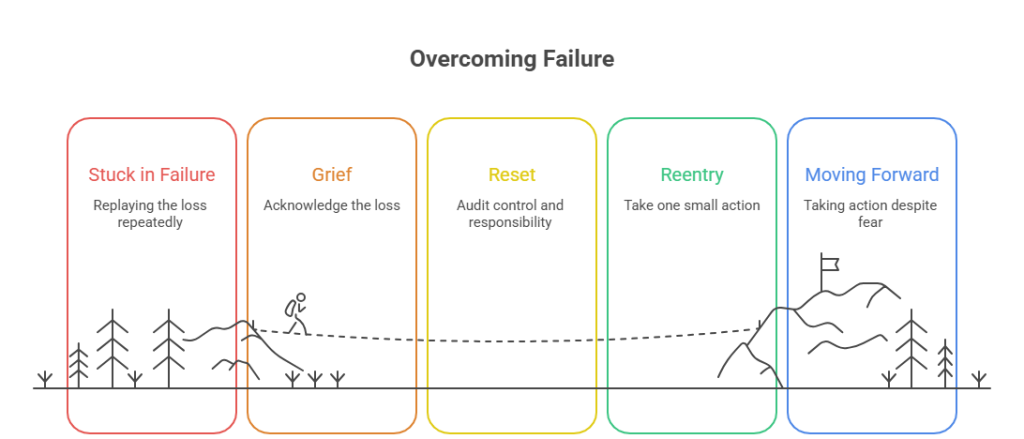
Most people treat recovery like a mood. They wait to “feel ready” before they move again. That’s backwards. Recovery isn’t a feeling you wait for — it’s a sequence you walk through, whether you feel ready or not.
There are three stages, and skipping any one of them is why so many setbacks turn into permanent identities.
Grief. You have to let the loss be a loss before you can do anything useful with it. This is not about wallowing for a month. It’s about giving yourself an honest window — hours, not weeks — to feel the disappointment without narrating it into a story about who you are. “I lost the client” is a fact. “I always sabotage good things” is a story, and it’s the story that keeps people down long after the fact has stopped being relevant.
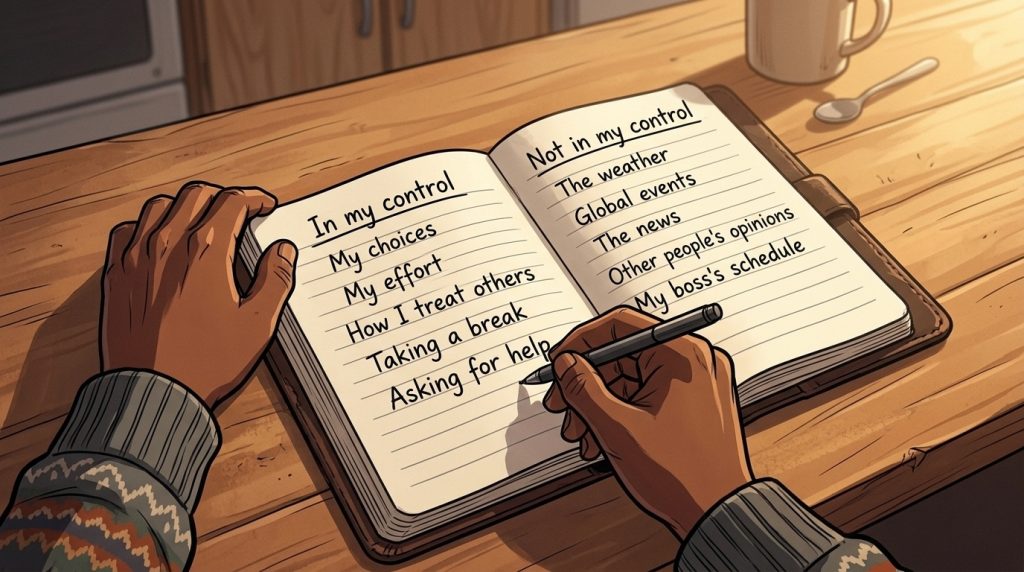
Reset. This is the audit stage. What actually happened, without the shame filter? Where was the decision that led here — and which parts of it were in your control? Most setbacks have a specific, findable cause. Find it. Naming the real cause is what separates a lesson from a wound.
Reentry. The smallest possible action that puts you back in the room. Not a comeback tour. One email. One conversation. One rep. Reentry isn’t about proving anything to anyone watching—it’s about proving something to the only person whose trust you actually need to rebuild, which is you.
Here’s the table that makes the difference between these stages visible, because most people move through them in the wrong order or skip the middle one entirely:
| Stage | What it looks like | What it’s not | Time to spend here |
|---|---|---|---|
| Grief | Naming the loss out loud, to yourself or one trusted person | Replaying the failure on a loop for days | Hours, not weeks |
| Reset | An honest audit of what was and wasn’t in your control | Self-punishment disguised as “reflection” | One sitting |
| Reentry | One small, specific action back into the arena | Waiting to feel fully confident first | Within 24 hours |
Why Falling Feels Heavier Here
If you grew up in a home, a street, or a church where failure was public property, you already know this table isn’t just psychology. It’s survival.
In a lot of South African communities, a setback doesn’t stay yours. Your aunty knows before you’ve told your mother. The taxi rank has an opinion. Someone at church is already praying about it in a tone that sounds a lot like gossip wearing a Sunday outfit. Shame here isn’t private — it’s communal, and it moves fast.
That changes the maths of falling down. Elsewhere, a failed business or a missed opportunity is a private disappointment you process on your own timeline. Here, it can feel like a verdict delivered by everyone who’s watching to see what you do next. And because family systems in South Africa are often collective rather than individual — your win is the family’s win, and your fall can feel like the family’s fall too — the pressure to perform recovery, or to hide the fall completely, is heavier than the fall itself.
This is why so many people choose disappearance over reentry. Not because they lack resilience, but because reentry means walking back into a room full of people who already know. It’s easier to go quiet, move areas, and change your number than to face the aunty at the next family gathering.
But disappearance doesn’t heal anything. It just delays the reentry stage indefinitely, and the longer reentry gets delayed, the more the fall calcifies into an identity. “I failed at that business” quietly becomes “I’m not a business person.” One is a fact about a moment. The other is a life sentence you handed yourself.
The way through isn’t to ignore the judgement. It’s to decide, deliberately, that your recovery timeline belongs to you, not to whoever’s watching from the stoep.
The Move: The 24-Hour Recovery Protocol
Theory doesn’t get you back up. A protocol does. Use this within 24 hours of any real setback — a lost job, a failed exam, a relationship ending, or a business that didn’t make it.
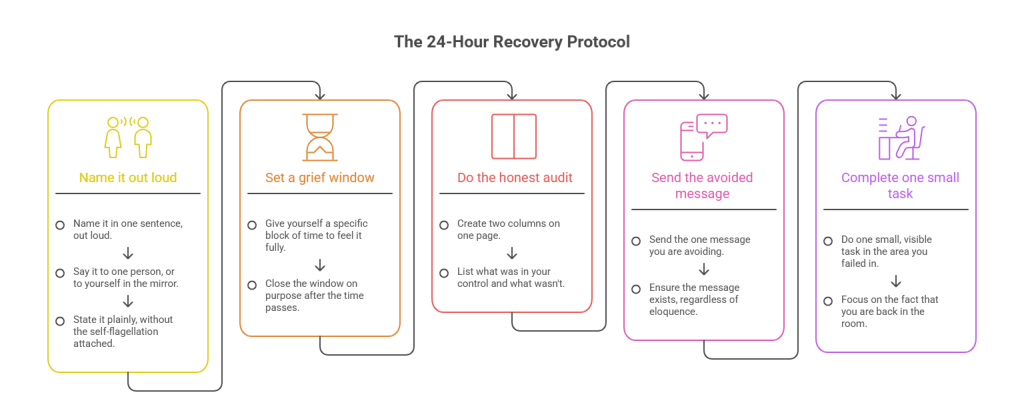
That’s the whole protocol. It’s small on purpose — small enough that shame can’t talk you out of it.
The Real Enemy: Perfectionism, Not the Fall
Here’s the part people get wrong most often. They think the setback is what’s stopping them. It usually isn’t. What stops people is the belief that they need to come back perfectly or not come back at all.
Perfectionism disguises itself as high standards. It’s not. It’s fear wearing a suit. It tells you that if you can’t return with a flawless plan, a guaranteed win, or a version of yourself that’s already fixed every flaw that caused the fall—you shouldn’t return yet. So people wait. And waiting for perfect conditions is just a slower, quieter way of staying down.
The people who recover fastest aren’t the ones with the best plans. They’re the ones willing to re-enter messily. A half-formed email. An awkward conversation. A first attempt that isn’t good yet. Progress after a setback is rarely impressive to watch. It’s boring, small, and unphotographed — and that’s exactly why most people quit at this stage. Nobody’s clapping for the Tuesday where you sent one unpolished message. But that Tuesday is the whole recovery.
Common Questions About Coping With Setbacks
What are coping skills for setbacks?
The core ones are simple: naming the loss honestly, giving yourself a defined grief window instead of an open-ended one, auditing what was actually in your control, and taking one small action back into the situation within 24 hours. Coping skills aren’t complicated. They’re just uncomfortable to use.
What is the healthiest way to deal with a setback?
You feel it fully for a limited time, then act. The unhealthy versions are the two extremes — either suppressing the disappointment entirely and pretending you’re fine, or living inside the disappointment indefinitely. Healthy recovery has a start and an end to the grief stage.
How do I regain confidence after a setback?
Confidence doesn’t come back through pep talks. It comes back through small proof. Every completed rep of reentry — one message sent, one task finished — is evidence your identity uses to rebuild trust in yourself.
How can I turn a setback into a learning experience?
Only after the reset stage. Should you try to extract lessons while you’re still in raw grief? Usually it just produces more self-criticism dressed up as insight. Do the audit first. The lesson shows up once the emotion has room to breathe.
How can I build resilience after repeated setbacks?
Resilience isn’t a personality trait some people are born with. It’s a pattern built by repeating the recovery arc enough times that your identity starts to expect the reentry, not just the fall. Each cycle makes the next one faster.
How can journaling help me process a setback?
It gives the grief and reset stages a container instead of letting them loop endlessly in your head. Writing “what happened, what was in my control” on paper does the audit work faster than thinking about it in circles ever will.
When should I seek professional help after a major setback?
If the grief window won’t close, whether weeks or months in, you still can’t function, sleep, or hold a conversation without the setback taking over – that’s a signal to bring in a therapist or counsellor, not a personal failure to add to the pile. Some setbacks are heavier than a protocol alone can carry, and that’s not weakness. That’s knowing your own limits.
Books and Journals Worth Having on Hand
A few resources that support each stage of the arc — not a substitute for the work but useful company while you do it.
| Resource | Best for |
|---|---|
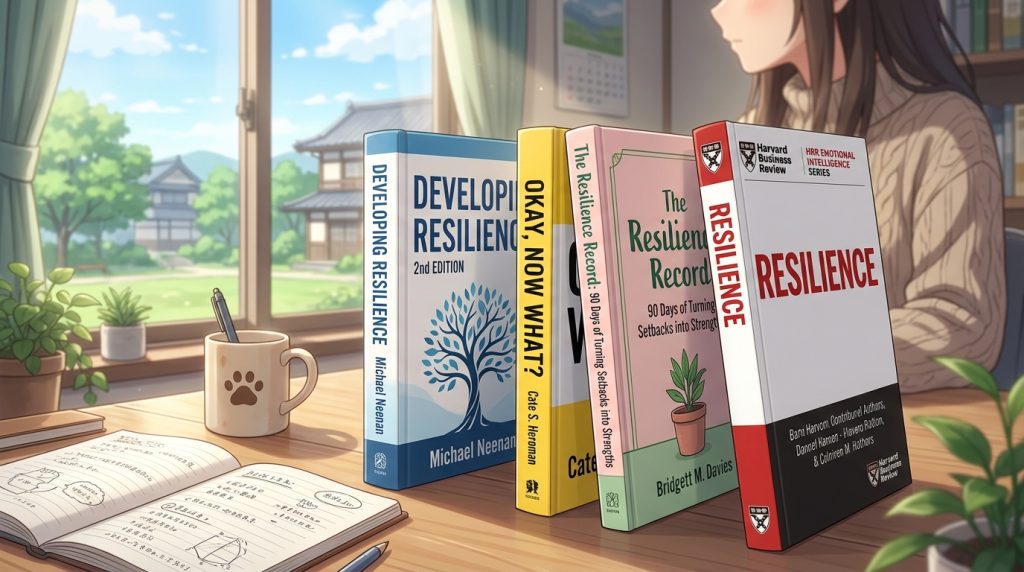
| Developing Resilience, 2nd Edition | The reset stage — cognitive tools for auditing what was and wasn’t in your control |
| Okay, Now What? | A simple recognize-reflect-redirect structure that mirrors the recovery arc |
| The Resilience Record: 90 Days of Turning Setbacks into Strengths | A daily habit for reentry, one small entry at a time |
| Resilience: HBR Emotional Intelligence Series | Career and business setbacks specifically |
The Ground Doesn’t Get to Keep You


You are going to fall again. Think about it: that’s not pessimism — it’s just what happens to anyone who’s actually trying to build something. The only real question, the one this whole piece has been circling, is how long you plan on staying down when it happens.
Not perfectly. Not with a polished comeback story ready. Just one message, one small task, one honest sentence said out loud within 24 hours of hitting the ground.
That’s the whole difference between a setback and a story you tell yourself for the next ten years.

If you’ve been down and you got back up, I want to hear it. Drop your comeback story in the WhatsApp channel. Not the highlight reel version. The real one, the messy first step. Someone in that channel is on the ground right now, and your one sentence might be the thing that gets them standing
Rebuild the Person Who Can Build the Future Series:
- You Can’t Build a New Future With an Old Version of Yourself
- How Self-Perception Shapes Success More Than Talent
- Your Feelings Are Real. But They Don’t Get to Be in Charge
- Mindset Shift Consistency: The Boring Season
- You Need to Trust Yourself First — Here’s How to Earn It
- You’re Just Building the Version That Will Actually
- How to Use Your Gifts to Serve Others: A Practical Guide.
- You Are the Average of Your Environment, Not Just Your Friends
- Falling Down Is Not the Problem. Staying Down Is. — You Are Here