“The version of you that got you here cannot get you where you’re going. That’s not an insult. That’s a law.”
The Story I Didn’t Want to Tell
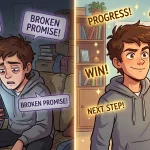
For two years, I called myself “the guy with the idea.”
Not the guy who built it. Not the guy who shipped it. The guy with the idea—the one who talked about the business at braais, who had the vision boards, who could explain the whole plan better than anyone who’d actually started.
I wasn’t lying. I believed it. That was the problem.
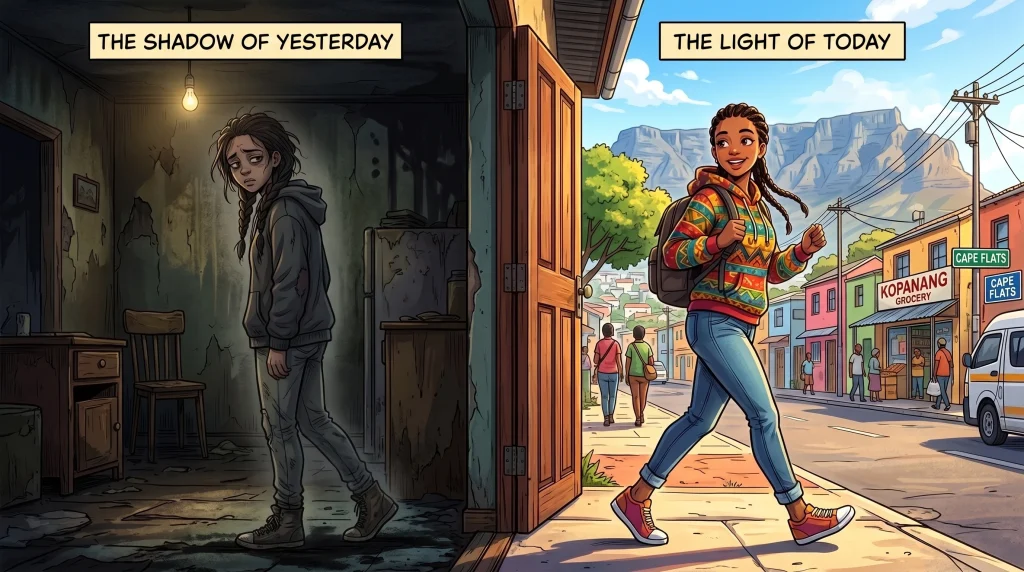
Life had already moved on. The market had moved on. The version of me that needed permission, that needed the idea to feel “ready,” that needed one more sign—that version was standing in a doorway that had already closed.
I kept showing up as him anyway because he was familiar. Because changing meant admitting the old story was costing me something.
Here’s what nobody tells you about starting over in life: it doesn’t feel like a fresh start. It feels like a small betrayal of the person you’ve been introducing yourself as for years.
I want to be honest about that upfront, because most “how to change your life” content skips the part where it’s uncomfortable to stop being someone, even someone who isn’t working anymore.
What Identity Actually Is (And Why It’s Not What You Think)
Identity is not who you are. It’s who you believe you are.
That’s the whole game. Not your talent, not your circumstances, and not even your history—your belief about what those things mean about you.
Two people can live through the same setback. One walks away believing, “I’m someone this happens to.” The other walks away believing, “I’m someone who gets back up.” Same event. Two completely different futures, built entirely on the story each of them chose to believe.
This is the Identity Reinforcement Loop, and once you see it, you can’t unsee it:
- Self-image drives behavior—you act in line with who you believe you are.
- Behavior creates evidence—every action leaves proof behind, for or against that belief.
- Evidence reinforces self-image — the proof convinces you even more that the belief was true.
Round and round it goes. If you want to reinvent yourself, you can’t skip straight to the future life. You have to interrupt the loop at the belief.
Your Brain Isn’t Built to Find the Truth. It’s Built to Confirm What You Already Believe
Here’s the part that should genuinely unsettle you: your brain filters reality through your current self-concept, in real time, without asking your permission.
If you believe you’re undisciplined, your brain will quietly highlight every missed gym session and file it as proof. It will let the days you showed up slide past unnoticed, because they don’t confirm the story.
This is called confirmation bias, and it’s not a character flaw — it’s just how the mind is wired to save energy. But it means your “evidence” about yourself is never neutral. It’s curated by the very belief it’s supposed to be testing.
So when you say “this is just who I am,” understand what you’re really saying: “this is the version of me my brain has been building a case for.”
A new beginning doesn’t start with new circumstances. It starts with putting your brain on trial and demanding it look at evidence it’s been ignoring.
The Identity Traps Keeping South African Youth Stuck
I hear these lines constantly, and I used to say some of them myself:
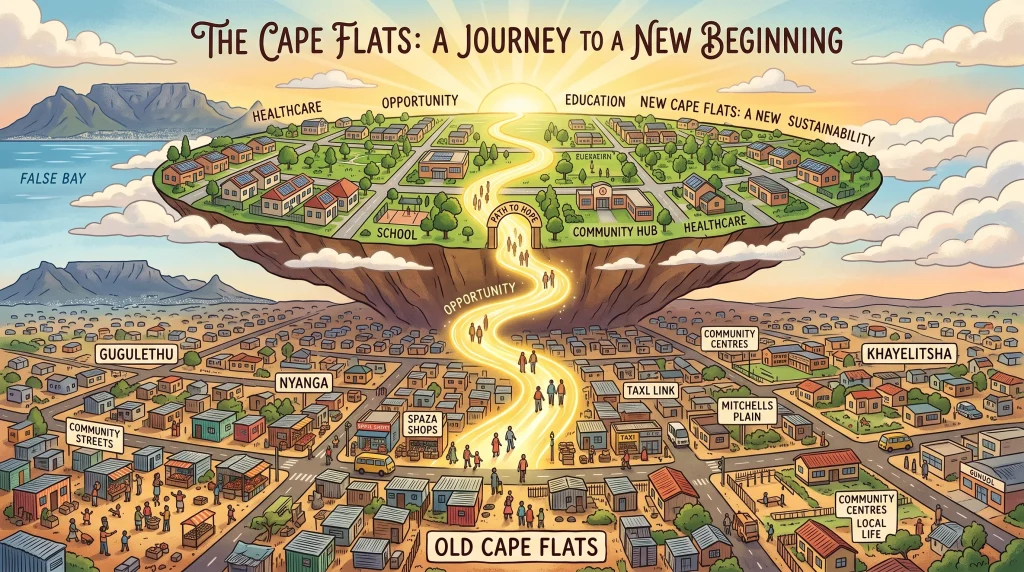
- “I’m from the Cape Flats, so I can’t be the one who builds something big.”
- “People like us don’t get to start over—we just survive.”
- “My family has always struggled with money, so I probably will too.”
- “I didn’t finish that course, so I’m not the type who finishes things.”
Every one of these is a place-of-origin or past-event sentence wearing an identity costume. Notice the pattern: something that happened, or somewhere you’re from, gets promoted from a fact to a permanent verdict about who you’re allowed to become.
A location is not a life sentence. A past result is not a permanent identity. But your brain will treat it like one, forever, unless you interrupt it on purpose.
This is exactly why building the life you want has to start inside, before it ever shows up outside. You cannot build a better future by working harder inside an old identity—you’ll just get a faster version of the same stuck story.
The Move: The 3-Question Identity Audit
This is the practical part. No theory left—just three questions. Sit with a notebook, no phone, and answer these honestly:
1. Who have I been calling myself without meaning to?
Listen to your own sentences this week. “I’m just not a disciplined person.” “I’m the one who always starts and never finishes.” Write down the label, exactly as you say it.
2. What is that identity costing me, right now, today?
Not someday. Today. What decision did you avoid this week because some old version of you was still driving? Name the cost in plain language.
3. What would the next version of me do in the next 24 hours?
Not next year. Not “eventually.” One action, small enough to actually happen, that only the new identity would take. Do that action before you sleep tonight.
That’s the whole audit. It takes fifteen minutes, and it will outperform a year of vision boards because vision boards describe a destination, and this audit produces evidence, and evidence is the only currency your brain accepts.
Frequently Asked Questions
How do I create a new life when I feel stuck?
“Stuck” isn’t a life problem. It’s an identity problem. You don’t need a new life first—you need new evidence that you’re someone who moves. Start smaller than feels meaningful. One decision, made on purpose, is the first brick.
What is the first step to starting over in life?
The first step to starting over in life is never the big, dramatic one. It’s naming the version of you that’s running the show right now, out loud, on paper, so it stops running in the background unchallenged.
How do I let go of my old identity?
You don’t let go of it by hating it. You let go of it by outgrowing it—stacking enough new proof that the old label stops fitting. Grip loosens when the new evidence gets louder than the old story.
How long does it take to build a new life?
Longer than you want, shorter than you fear. Identity shifts aren’t measured in weeks. They’re measured in reps — how many times you chose the new version of you when the old one would’ve been easier.
What habits help you change your life?
Small, boring, repeatable ones. The habit that changes your life is rarely exciting. It’s the one you do on the days you don’t feel like it, because that’s the day it’s actually voting for who you are.
How do I stay motivated during major life changes?
You don’t rely on motivation—it’s unreliable by design. You rely on identity. When the goal is ‘I want to change,’ motivation fades. When the goal is ‘this is who I am now,’ you keep showing up even when it’s flat.
How do I know what kind of life I want?
Stop asking what you want and start asking who you’re proud to be. Life follows the identity, not the other way round. Get clear on the person, and the life you want gets a lot easier to picture.
What should I focus on after a life reset?
Evidence, not excitement. The reset gives you a clean page. What you focus on next is filling that page with small proofs—kept promises, finished tasks—that the new identity is real and not just a mood.
Can journaling help me create a new life?
Yes — if you use it to track identity evidence, not just feelings. A journal that only holds your emotions keeps you looking backward. A journal that tracks what you did today builds the case for who you’re becoming.
How do I rebuild confidence after a setback?
Confidence isn’t rebuilt by pep talks. It’s rebuilt by proof. One kept promise to yourself, however small, is worth more than a hundred affirmations because proof is the only thing your brain actually believes.
What mindset is needed to start over?
The mindset that works is simple and uncomfortable: the old version of you is allowed to be tired, but not allowed to vote. You listen to it. You don’t let it drive.
How do I create a new life without money?
Money is not the first resource you need. Decisions are. A new life without money starts with the same identity audit as a new life with money — it just gets built with what’s already in your hands.
Your New Future Starts With a Decision, Not a Deadline
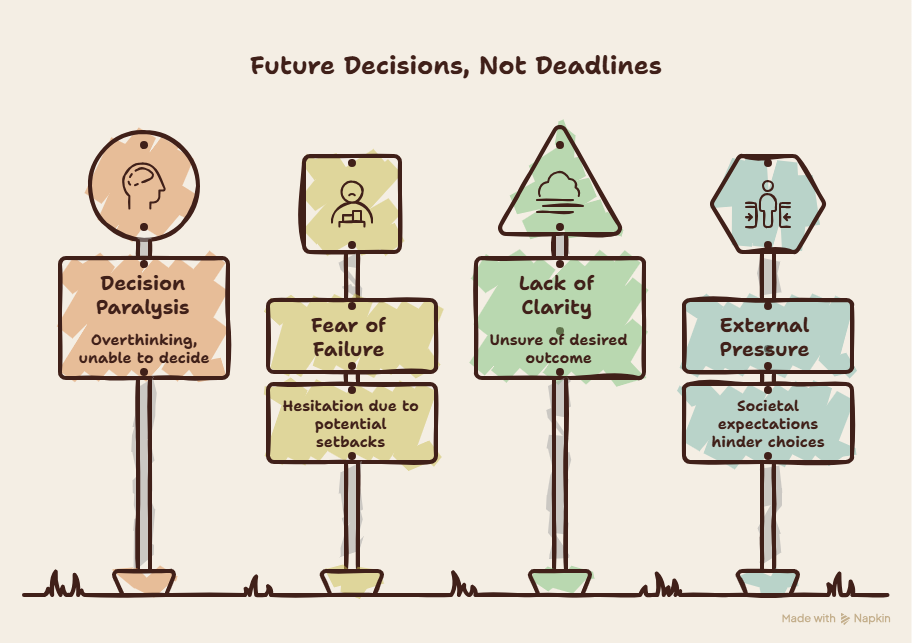
Nobody wakes up one random Tuesday and gets handed a new life. It gets built—one uncomfortable decision at a time—by a version of you that’s willing to act before it feels ready.
You don’t need a new personality or permission from your past. You need one small piece of evidence today that the old story isn’t the whole story anymore.
So here’s the direct question I’ll leave you with: Which version of you answered your last five decisions—the one who got you here, or the one who’s trying to get you where you’re going?
If you’re honest, and it was the old one, you already know what today’s assignment is.
Keep the Evidence Coming
This is exactly the work we do every week on the WhatsApp channel—small identity challenges, real audits, and no fluff.
✅ Join the WhatsApp channel for your weekly identity challenge 👇 Join here
Tools to Support the Reset
If you want physical or digital tools to track the evidence as you rebuild, these are worth a look:
| Tool | What it’s for |
| Transform Planner | A 6-month growth journal built around confidence, balance, and self-discovery. |
| The Habit Tracker Journal | A goal-setting and habit-tracking journal for building consistency through reflection. |
| Morning Sidekick Journal | A structured habit tracker often used for morning routines and self-discipline. |
| Goal Setting Workbook | A practical, workbook-style resource for setting and tracking new goals. |
Rebuild the Person Who Can Build the Future Series:
- You Can’t Build a New Future With an Old Version of Yourself