Big goals often feel exciting at first. They spark motivation and give us hope. Then reality sets in. The goal still matters—but it feels distant, heavy, and hard to start.
This isn’t a motivation problem. It’s a structure problem.
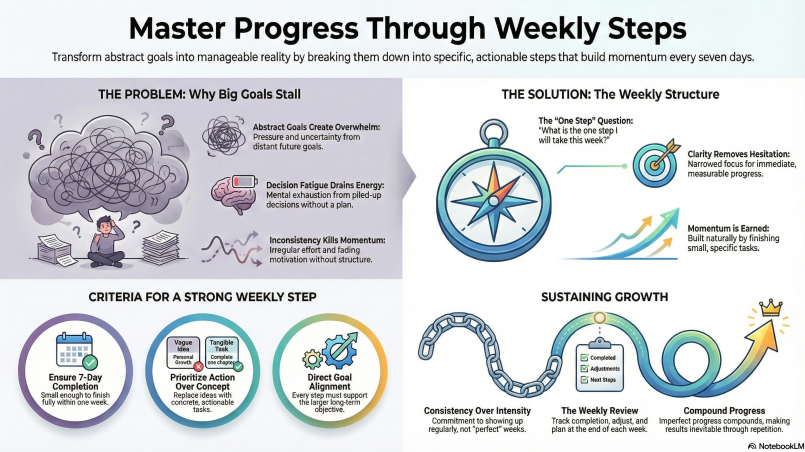
When we break a goal into weekly steps, progress stops feeling overwhelming and starts feeling possible. Action becomes clearer. Momentum begins to build.
Breaking goals into weekly steps is one of the most effective ways to create consistent action and long-term personal growth—without burnout.
Why Big Goals Stall Without Structure
Big goals fail when they stay vague. Without structure, they sit in the background of daily life, competing with distractions, responsibilities, and fatigue.
We tell ourselves we’ll “get to it soon.” Soon becomes later. Later becomes never.
Weekly structure changes this. It brings the goal into the present. Instead of carrying the weight of an entire year, we focus on what needs to happen this week. That shift removes pressure and creates direction.
Clarity turns intention into action.
Before weekly steps can work, clarity is essential. If you’re still trying to focus on too many things at once, choosing one meaningful goal is the foundation that makes consistent progress possible. This is explored further in Choosing One Goal: The Most Powerful Decision You’ll Make in 2026
Weekly Steps Create Momentum
Momentum doesn’t come from thinking about change. It comes from completing small actions consistently.
Weekly steps give us something to finish. Each completed step builds evidence that progress is happening. Confidence grows naturally when we see ourselves following through.
Instead of waiting for motivation, we create movement. Movement creates motivation.
Momentum isn’t forced. It’s earned.
How to Define a Weekly Step
A weekly step should feel specific and doable. It should move the goal forward without demanding perfection.
The best weekly steps:
- Focus on action, not ideas
- Fit realistically into your schedule
- Move the goal forward in a clear way
Instead of saying, “Work on personal growth,” choose something concrete. Read one chapter. Practice one habit daily. Complete one task.
Clear steps remove hesitation. When you know what to do, starting feels easier.
Why Weekly Planning Reduces Stress
Uncertainty drains energy. When the week starts without a plan, decisions pile up and overwhelm grows.
Weekly planning removes that friction. It creates boundaries around your effort. You know what matters—and what can wait.
With a clear plan, you stop negotiating with yourself. You act with intention instead of reacting to pressure. Stress decreases because direction replaces doubt.
Structure creates calm.
The Role of Consistency
Consistency matters more than intensity. You don’t need perfect weeks. You need committed weeks.
Some weeks will feel productive. Others will feel slow. Progress still happens when you keep showing up.
Consistency builds trust with yourself. Each week you follow through, even imperfectly, strengthens confidence. Over time, small actions compound into meaningful change.
Progress grows quietly.
Tracking Weekly Progress
Tracking keeps you aware. It turns effort into feedback.
At the end of each week, pause and reflect:
- What did I complete?
- What worked well?
- What needs adjustment next week?
This reflection isn’t about judgment. It’s about learning. When you track progress, you stay connected to the process instead of drifting away from it.
Awareness keeps growth aligned.
Why Weekly Steps Build Long-Term Change
Lasting change doesn’t happen in dramatic bursts. It happens through steady effort.
Weekly steps support long-term growth by:
- Encouraging sustainable habits
- Preventing burnout
- Keeping progress realistic
- Allowing flexibility when life changes
This approach adapts with you. It grows as you grow.
Progress Is Built One Week at a Time
Your future doesn’t appear all at once. It takes shape through small, repeated choices.
When you break a goal into weekly steps, progress feels closer. Action feels lighter. Confidence builds naturally.
One goal.
One week.
Consistent action.
That’s how real progress is built.
This approach builds on the bigger picture of intentional growth discussed in 2026 as a Defining Year, where progress begins not with pressure, but with purposeful choices made consistently over time.
Weekly planning transforms goal setting from a distant idea into consistent, achievable progress.





1 Comment